


Jim Corbett Jungle Safari Etiquette: Dos and Don'ts for First-Time Visitors
Read More
Most first time visitors arrive at Corbett expecting a chase scene. What they get is stillness, birdsong, and a guide who quietly cuts the engine. Learning what a tiger actually does between one sunrise and the next changes how you watch the forest, and it is exactly why the most rewarding Jim Corbett national park packages are built around behaviour rather than luck.
Corbett is the right classroom. India's oldest national park, notified in 1936, it recorded 260 tigers in the 2022 All India Tiger Estimation, the highest count for any single reserve in the country.
The Tiger's Daily Clock
A wild tiger is not busy. It is efficient.
- Rests or sleeps for roughly 18 to 20 hours a day
- Turns active mostly between dusk and dawn
- Covers 10 to 20 km on a patrol night, unhurried
- Succeeds in only one out of every ten to twenty hunts
- Eats up to 30 to 40 kg in a single sitting, then rests for days
Once you know this, an empty looking grassland stops feeling empty.
Why All That Rest Makes Sense
Energy is currency. A failed charge costs more than a missed meal, so the animal conserves. Through the day's heat it chooses shade, ravines and riverbanks. The Ramganga belt works as a thermostat, which is why waterholes reward patience in summer.
Dawn and Dusk: The Two Windows That Decide Your Safari
Safari timings are not administrative accidents. Morning and afternoon slots overlap with crepuscular activity, the hours when tigers move, mark and hunt.
Watch for these before looking for the tiger itself:
- Fresh pugmarks with sharp, unblurred edges
- Sambar or langur alarm calls repeating from one direction
- A sudden hush after a chorus of birds
- Chital frozen mid step, every head facing the same way
Naturalist-led drives exist to decode these cues, which is why well planned jim corbett national park packages pair a trained guide with the permit instead of handing you a jeep and hoping.
Territory Is a Conversation, Not a War
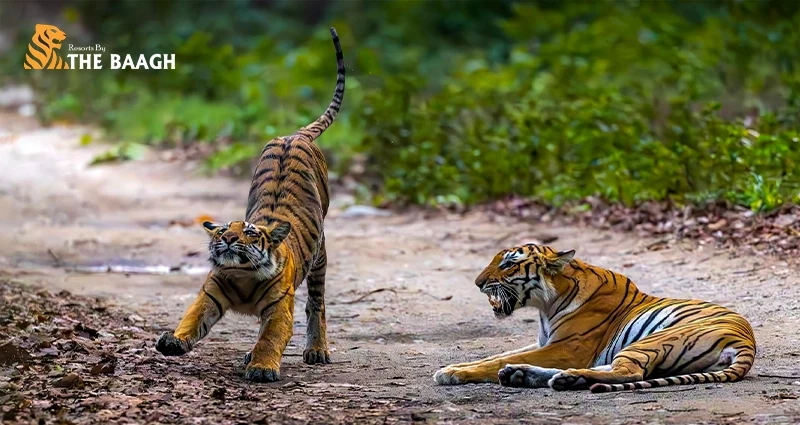
Tigers rarely fight. They negotiate, in writing.
- Males hold 15 to 60 sq km; females keep smaller, overlapping ranges
- Scent sprayed on tree trunks announces identity, health and readiness
- Claw rakes on bark serve as visual signposts
- A roar carries close to 3 km through sal forest
Every stripe pattern is unique, much like a fingerprint. That fact alone lets camera trap researchers count individuals rather than guess.
The Hunt: Patience First, Power Later
A tiger stalks for minutes to close a gap of barely 20 metres, then commits for seconds. Most attempts fail. What you are likely to witness is the quiet build up, not the sprint.
Best Time to Visit Jim Corbett
The best time to visit Jim Corbett depends on what you are chasing.
- November to February: crisp mornings, peak birding, most comfortable drives
- March to mid June: thin cover and water dependence, statistically the strongest sighting odds
- Mid June to mid November: monsoon; core zones such as Dhikala close while buffer zones stay open
Seasoned travellers compare jim corbett tour packages across these windows before locking dates, since zone availability shifts month to month.
A Line Worth Carrying Into the Forest
"A tiger is a large-hearted gentleman with boundless courage."
Source: Jim Corbett, Man-Eaters of Kumaon, Oxford University Press, 1944.
Corbett wrote this after decades tracking tigers on foot. It reframes the animal from villain to neighbour, which is exactly the mindset that makes a safari rewarding. Patience replaces expectation, and observation replaces the scramble for one photograph.
Where You Stay Shapes What You See
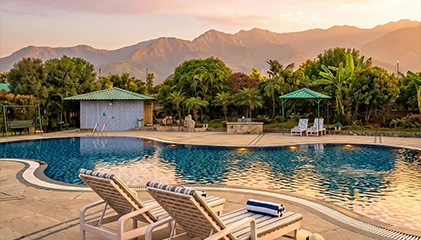
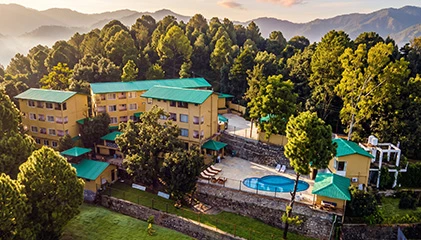
Good sightings begin before the gate opens. Resorts By The Baagh sits on the edge of Jim Corbett National Park, with dawn tiger safaris and guided forest walks built into the stay. Minutes from the entry gate means reaching your zone while the forest is still cool and vocal, then an unhurried breakfast instead of a long commute. That proximity, paired with resident naturalists, quietly separates the best resort in jim corbett national park from a room with a view.
Conclusion
A tiger's day is mostly rest, punctuated by short bursts of decision. Once you stop expecting drama and start reading pugmarks, alarm calls and shade, Corbett opens up. The forest was always telling you where the tiger was. You just needed the grammar. Choose your season deliberately, book jim corbett national park packages that include an experienced naturalist, and let the animal set the pace.
Quick Summary
- Tigers rest 18 to 20 hours daily, most active at dawn and dusk
- Hunting success sits near one in ten to one in twenty attempts
- Territory is marked by scent, claw rakes and roars, not combat
- Corbett held 260 tigers in the 2022 national estimation
- Summer offers better odds; winter offers better comfort
- Alarm calls and fresh pugmarks remain the most reliable indicators
Frequently Asked Questions
1. What is the best time to visit Jim Corbett for tiger sightings?
March to mid June gives the strongest odds, since thinning cover and heat push tigers toward water. November to February suits birding and comfort. Both seasons reward early morning slots and calm, patient observation.
2. Do Jim Corbett national park packages include safari permits?
Most reputable operators bundle permits, jeep, driver and a licensed naturalist. Always confirm the zone allotted, because Dhikala, Bijrani and Jhirna differ in terrain, access rules and realistic sighting probability during your travel month.
3. How far ahead should I book jim corbett tour packages?
Book thirty to sixty days ahead for winter weekends and festive dates. Core zone permits sell out quickly, so early confirmation protects both your preferred safari zone and your accommodation choice.
4. What makes the best resort in Jim Corbett national park worth the cost?
Proximity to the gate, resident naturalists, early breakfast service and forest facing rooms. These shape your safari day rather than simply adding luxury, saving travel time when the forest is most active.
5. Can I see a tiger on a single safari drive?
Possibly, though sightings are never guaranteed. Most visitors book two or three drives across different zones. Treat each drive as forest immersion, and the tiger becomes a reward rather than a requirement.
Your Journey, Elevated
Turn Your Getaway Into
An Experience
An Experience
Leave the ordinary behind and discover journeys designed around the moments that matter. From stunning destinations to unforgettable stays, every detail is thoughtfully planned to make your escape feel truly special.
Whether you're looking for adventure, relaxation, or something in between, we're here to help you explore, unwind, and create memories worth taking home.