



Planning a Corporate Offsite in the Hills: A Team Outing Checklist for Bhimtal & Corbett
Read More
Are you planning a trip to the jungle soon? Most people visit Jim Corbett just to see the royal Bengal tiger. But this famous forest has so much more to show you. It is home to hundreds of unique animals and birds. You will find surprises around every corner if you look closely. Let us explore the amazing wildlife that waits for you beyond tigers.
What makes this forest so special for wildlife lovers? The park has a very rich ecosystem with mountains, rivers, and deep valleys. According to Wikipedia.org, about 73% of the park is covered by dense moist forests. To see these animals clearly, you should know the best time to visit Jim Corbett. The dry months from November to May offer the best views. Many travelers book their stay at Jim Corbett National Park resorts during this peak season.
8 Surprising Wildlife Encounters Beyond the Tiger
You can choose from many Jim Corbett National Park packages to see these wonderful creatures. A good safari tour will guide you to the right zones. If you stay at a luxury property like Resorts by the Baagh, expert naturalists can help you spot rare wildlife. Here are eight amazing animals you might encounter on your next trip.
- The Asian Elephant: These giants roam the riverbeds and grasslands. Seeing a herd cross the Ramganga river is a magical sight. They are very common in the Dhikala zone.
- The Gharial Crocodile: This fish-eating reptile has a very long and thin snout. They bask on the sandy banks of the river. They are a critically endangered species.
- The Indian Leopard: These silent hunters live in the rocky hills and dense parts of the jungle. They love to rest on high tree branches. Spotting one takes great luck.
- The Smooth-Coated Otter: These playful animals live near the water streams. You can see them swimming in small groups. They love to catch fish and play on the mud banks.
- The Great Hornbill: This massive bird has a bright yellow and black beak. They make loud calls that echo through the forest. Look up at the old tall trees.
- The Sloth Bear: These shaggy animals look for termites and honey. They have long claws and a white mark on their chest. They are usually active during the late evenings.
- The Crested Serpent Eagle: This large bird of prey sits quietly on tree branches. It hunts for snakes and lizards on the forest floor. Its sharp eyes see everything below.
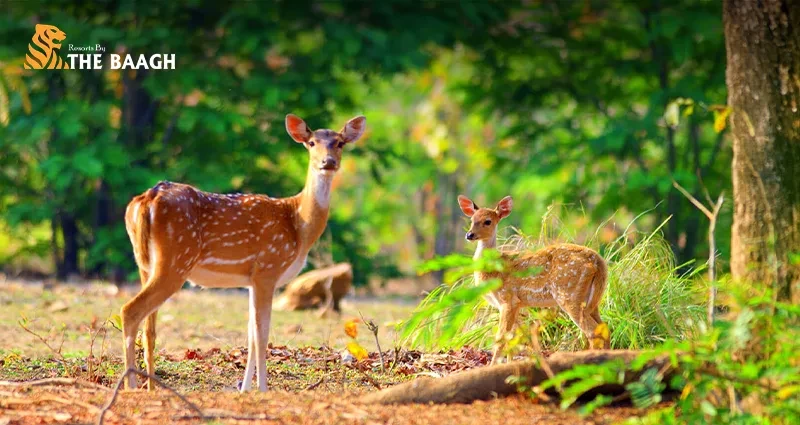
- The Barking Deer: These small deer make a unique sound that sounds exactly like a dog barking. This bark warns other forest animals about predators like tigers or leopards nearby.
What the Jungle Records Reveal About This Forest
Did you know that this park is a paradise for bird watchers? According to the Zoological Survey of India, there are about 600 bird species living in this forest. This includes both local birds and migratory birds that fly in during winter. You can explore these bird habits easily with the right Jim Corbett National Park packages. Choosing the best nature resorts in Corbett gives you access to open lawns where many birds visit daily.
The river system inside the park is also vital for rare aquatic life. A recent survey by the Wildlife Institute of India found that the Ramganga river protects a rare breeding population of gharials. In fact, the report states that 48 gharials live right inside the reserve boundaries. Guests staying at Resorts by the Baagh often take river walks to look for these unique reptiles. You can add these river safaris to your custom Jim Corbett National Park packages.
An Expert Look Inside Corbett’s Ecosystem
Wildlife experts always praise the deep diversity of this region. Dr. Saket Badola, the Director of the Corbett Tiger Reserve, noted during an aquatic census that the reserve helps conserve both land and water species. This shows that every small creature in the park matters. You can experience this rich biodiversity yourself by booking premium Jim Corbett National Park packages. Luxury stays like Resorts by the Baagh ensure you get a safe view of nature.
Plan Your Next Wilderness Adventure
Jim Corbett is not just about big cats. It is a living world full of elephants, rare birds, and unique river animals. Every safari brings a new story and a different sight. Are you ready to see these wonders with your own eyes? Pack your bags and book your trip today. The wildlife of Corbett is waiting to surprise you.
FAQs
1. Can I see elephants and tigers in the same safari zone at Jim Corbett National Park?
Yes. The Dhikala and Bijrani zones are famous for both elephant herds and tiger sightings. These animals share the same grasslands and riverbanks, so a single safari can often bring encounters with both species.
2. Which safari zone is the best for bird watching in the park?
The Durga Devi zone is widely considered the best zone for bird watchers. Its hilly terrain and close location to the Ramganga river attract many rare hill birds, water birds, and large birds of prey like eagles.
3. What should I pack for a wildlife safari focused on viewing smaller animals and birds?
You should definitely bring a good pair of binoculars and a camera with a zoom lens to spot distant birds or camouflaged reptiles. Wear muted, earth-toned clothes like khaki, olive green, or brown to blend into the forest environment.
4. Is it safe to take river walks to look for gharials and otters?
River walks are safe only when you are accompanied by a certified naturalist or forest guide in designated safe zones. Guests staying at Resorts by the Baagh can arrange guided nature trails that follow strict safety protocols near the water streams.
5. Are non-tiger wildlife sightings common during the monsoon season?
While the main safari zones close during the monsoon due to broken forest roads, the buffer zones remain open. The rainy season is actually an excellent time to see lush green landscapes, active amphibians, insects, and unique monsoon birds.
Your Journey, Elevated
Turn Your Getaway Into
An Experience
An Experience
Leave the ordinary behind and discover journeys designed around the moments that matter. From stunning destinations to unforgettable stays, every detail is thoughtfully planned to make your escape feel truly special.
Whether you're looking for adventure, relaxation, or something in between, we're here to help you explore, unwind, and create memories worth taking home.